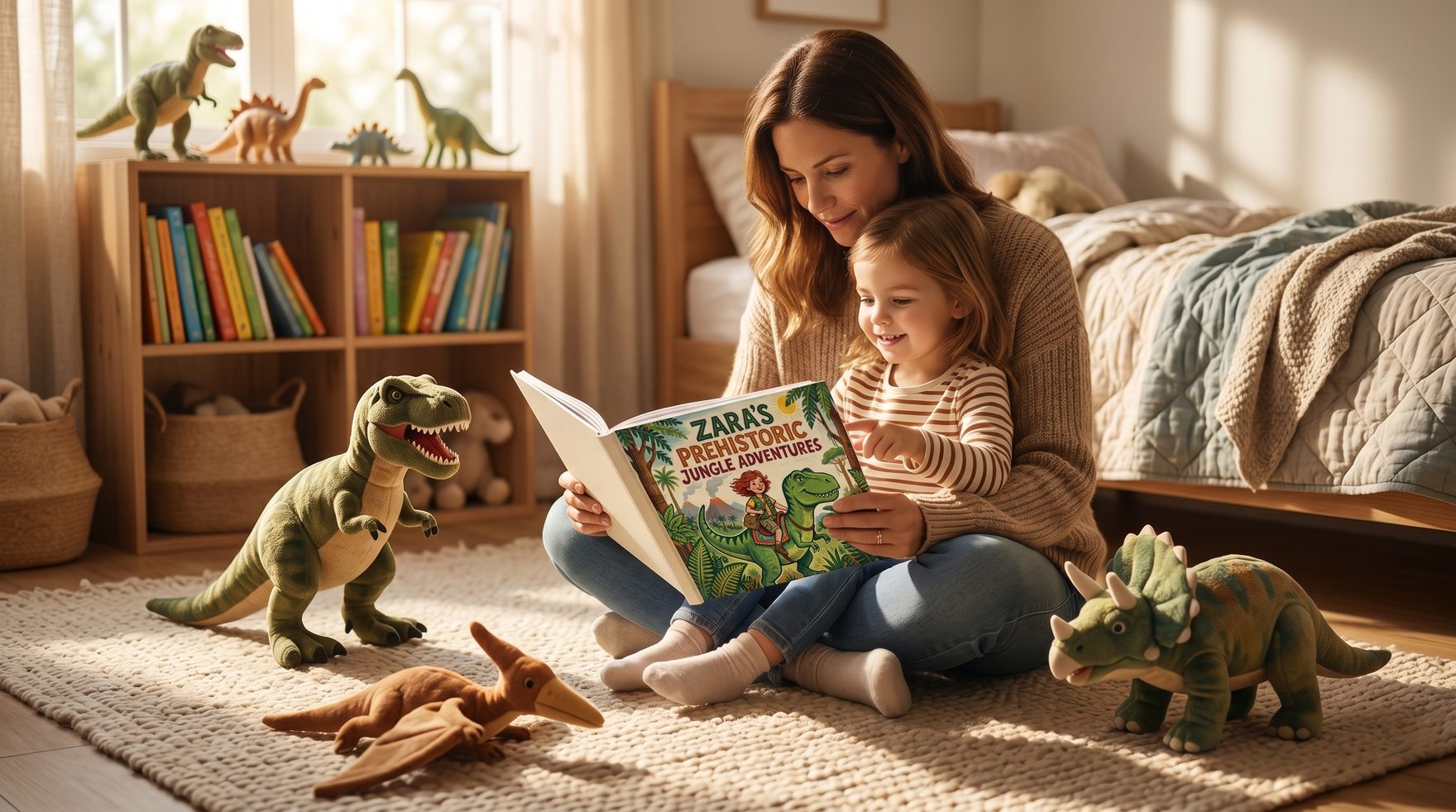
A search for "dinosaur book for kids" on Amazon now returns thousands of results that didn't exist eighteen months ago. Many are AI-spun in a weekend. Some have six fingers on the T-Rex. A few invent dinosaurs that never lived.
Parents have noticed. And they're right to be skeptical.
The Real Parental Fears About AI-Generated Kids' Books
The flood is real. AI tools have made it trivially easy for anyone to publish a "personalized" picture book — and the bottom of that market is genuinely grim. Misspelled species. Hallucinated facts. Faces that drift into the uncanny valley by page four.
When parents ask whether AI children's books are safe, three worries tend to surface:
- Factual accuracy — will the Velociraptor be the right size, from the right period, on the right continent?
- Inappropriate content — could the AI slip in something dark, scary, or just plain weird?
- Originality — is this a real story, or a template with a name swapped in?
These fears are valid. A raw AI generator with no human in the loop will produce exactly what its critics fear. But there's a meaningful gap between a one-click bot churning out 400 books a day and a curated platform where editors, illustrators, and writers shape every page. An ai dinosaur book for kids can be magical — or it can be junk. The system around the AI is what decides which.

Myths 1-3: Accuracy, Safety, and 'Scary' AI Imagery
Myth 1: AI gets dinosaur facts wrong. Sometimes it does. Left unsupervised, a language model will happily place a Stegosaurus next to a T-Rex (they missed each other by about 80 million years). Curated platforms solve this with constrained prompts, fact libraries pulled from paleontology references, and human editors who flag anachronisms before the book ships.
Myth 2: AI books contain inappropriate content. Modern story models have layered content filters, but filters alone aren't enough — they sometimes block too much, sometimes too little. The reliable safeguard is editorial review plus a wizard that lets parents read every word before paying. Little Stories calls this "Read it before you pay a cent," and it's not marketing flourish; it's the actual gating mechanism.
“The difference between a magical AI book and a creepy one is simple: a human read it before your child did.”
Myth 3: AI illustrations look creepy. The infamous seven-fingered hand. Style-locked illustration models — where the art direction is constrained to one of nine fixed aesthetics like Storybook watercolour or 3D Animation — produce dramatically more consistent results than open-ended image generators. Add a human art-review step and the failure rate plummets.
The contrast with anonymous Amazon AI books is stark: there, nobody ever looks at the final product. Not the author, not an editor, not an illustrator. The first human eyes on it are your child's.
Myths 4-5: Originality and Educational Value
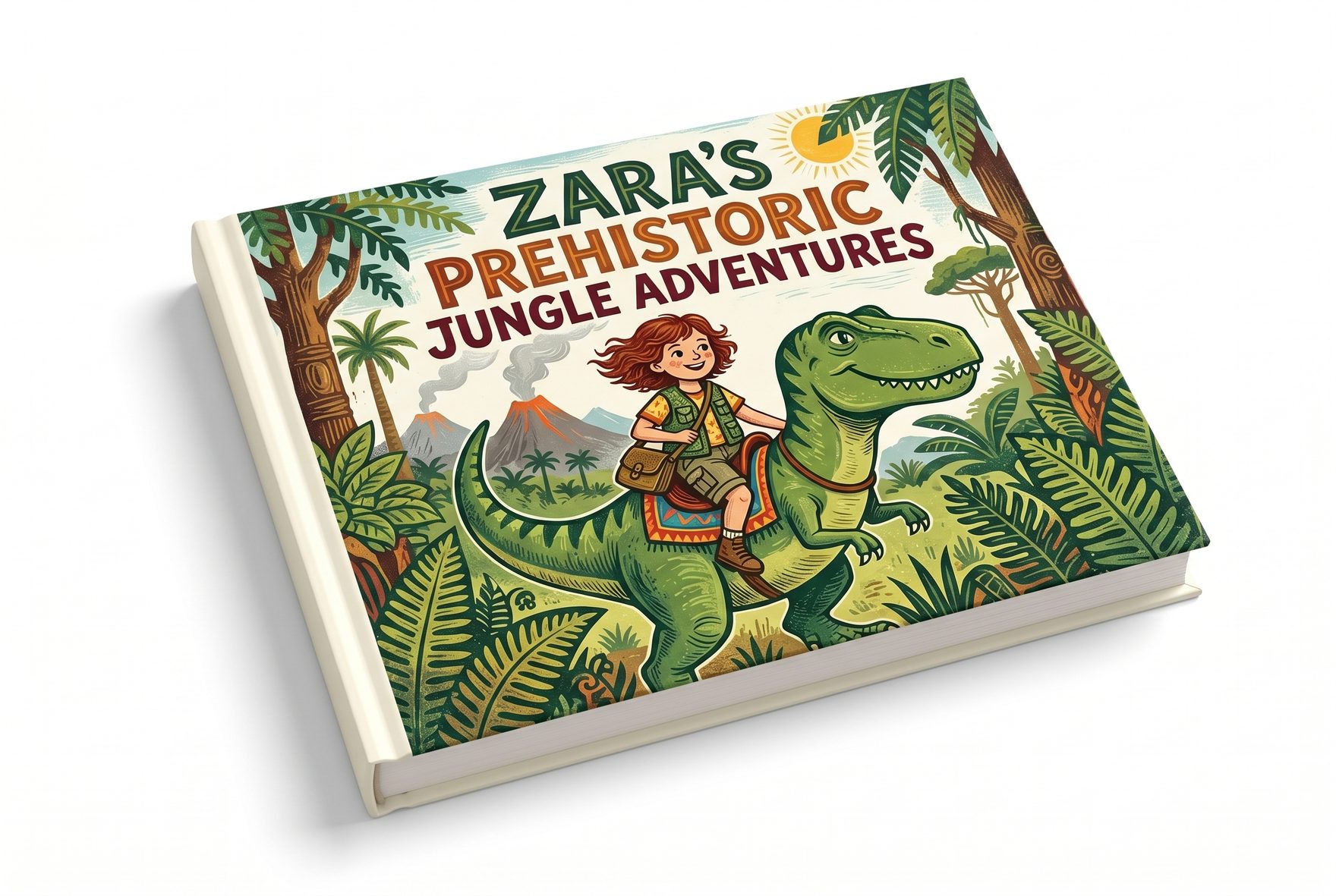
Myth 4: AI books are generic and soulless. This is true of template books. It is not true of story-driven personalization. When the hero is Zara, age 5, who loves pancakes and her grandmother's cat Otis, and the plot bends to include all three — that's not a swap-in. That's a story written for one reader.
A well-built personalized dinosaur story book generates the entire narrative from scratch. Two children with identical inputs would still receive two different stories.
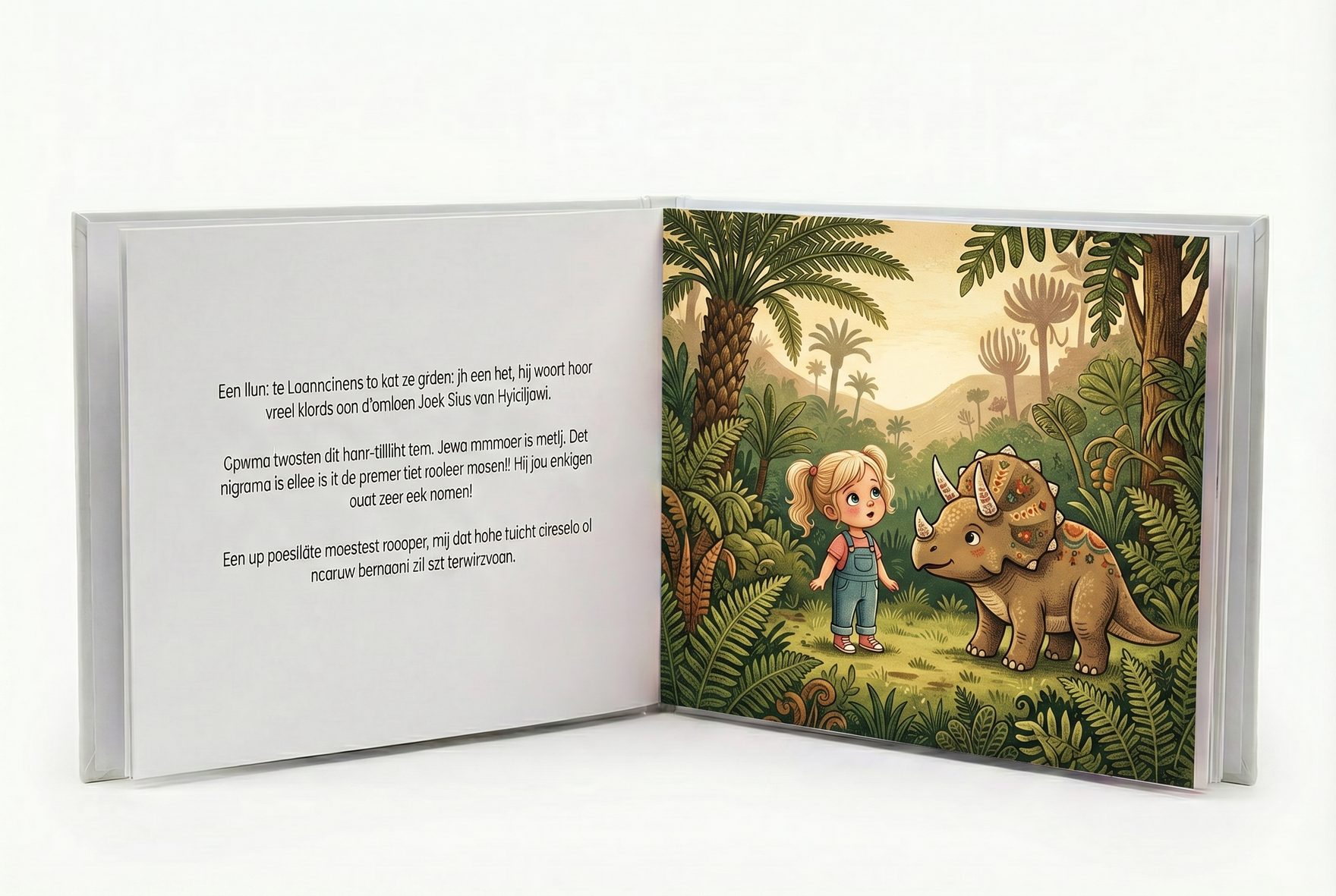
Myth 5: Kids learn nothing from AI books. The opposite, actually. Research on the "cocktail party effect" shows children pay sharper attention when they hear their own name. Cast a four-year-old as the paleontologist who discovers a new Triceratops nest, and suddenly the Cretaceous Period isn't abstract — it's her job. Curated dinosaur books weave in real species names, real habitats, and real time periods, which means engagement and retention move together.
Myths 6-7: Data Privacy and Replacing Human Authors
Myth 6: AI book sites steal my child's data. Read the privacy policy. A responsible platform collects what it needs (first name, age, hobbies) and discards what it doesn't. Little Stories, for example, deletes any uploaded photo within 24 hours — only the illustrated character is kept. The photo is also entirely optional; text descriptions work too.
Myth 7: AI replaces real authors and illustrators. The best platforms employ writers, editors, and artists who shape prompts, review output, and intervene when the model wanders. The AI is a tool — a fast, capable one — but the editorial judgment is human. That's the responsible model, and it's the one to look for.
A quick checklist parents can paste into a notes app:
- Is there a free preview before payment?
- Can text and illustrations be revised?
- Is there a transparent data and photo policy?
- Are illustration styles defined (not free-for-all)?
- Is the company a real, contactable business?
If a site fails three of those, close the tab.
How to Choose a Safe, Magical AI Dinosaur Book
For ages 2-7, the magic is in the specifics. A custom dinosaur book for toddlers works best when it gives the child something to physically point at: that's me, riding the T-Rex. That's our dog, hiding behind the fern. The plot can be simple — find the lost egg, befriend the Brachiosaurus — but the personalization needs to be deep.
Little Stories runs the full wizard in about five to ten minutes: pick the Dinosaurs theme, choose one of nine illustration styles, add Zara plus her little brother plus the family rabbit, name a favourite food, and a unique 18-page story arrives as a preview. Read it, request unlimited revisions, and only then decide between the digital PDF or a hardcover bundle. It pairs neatly with the broader category roundup in the best personalized AI children's books of 2026.
The honest test: order one personalized dinosaur adventure, read it next to a generic dinosaur book, and watch which one your child asks for the second night.