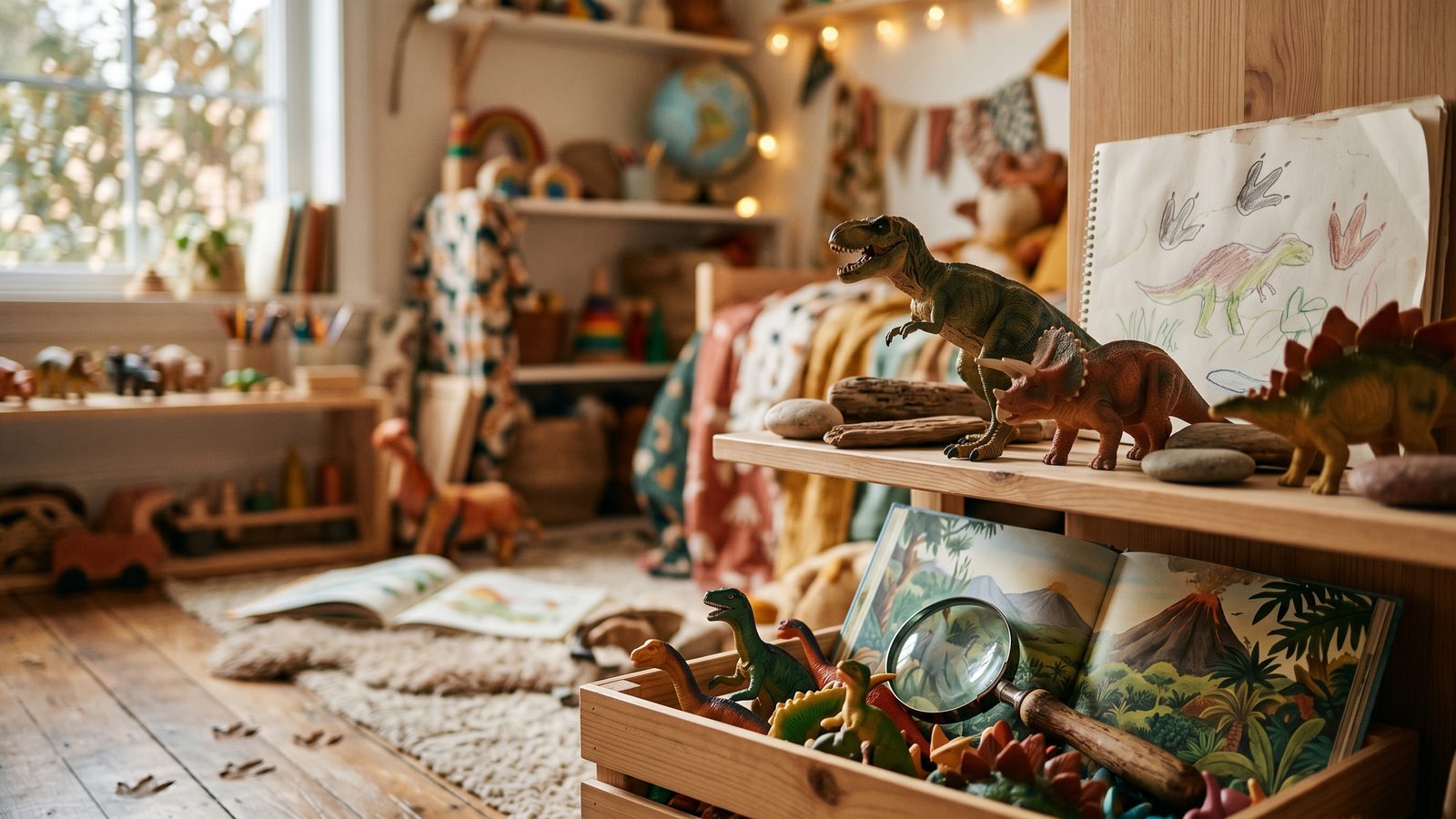
Your three-year-old can't reliably find her left shoe, but she can pronounce Parasaurolophus with the confidence of a tenured paleontologist. She knows what a Cretaceous is. She has opinions about the Spinosaurus-versus-T. rex debate. Shoes, however, remain a mystery.
If this sounds familiar, congratulations: you are living with an intense interest.
The Dinosaur Phase Is Real — And Scientists Have a Name for It
Developmental psychologists call them "intense interests" — sometimes "extremely intense interests," or EIIs — and they've been studied seriously since the late 1990s, with notable work coming out of Indiana University and the University of Wisconsin. The short version: roughly one-third of young children develop an obsessive focus on a single topic, and dinosaurs are consistently in the top three, neck and neck with vehicles and animals.

The window is surprisingly predictable. Interests emerge around age two or three, peak between four and five, and usually fade by the time a child is seven or eight — around the same moment school, friendships, and a wider social world start demanding attention.
“Roughly one in three children develops an intense interest — and dinosaurs are nearly always at the top of the list.”
None of this is pathological. No, your child does not need to be "cured" of dinosaurs. Intense interests are a healthy developmental milestone — a sign of a brain that has learned how to go deep.
Why Dinosaurs Specifically? The Psychology Behind the Roar
So why not, say, staplers? Dinosaurs are a perfect storm of toddler-brain catnip.
They're scary — but safely extinct. They're enormous, which flips the usual power dynamic for a small person in a big world. They're unambiguously real, unlike dragons or unicorns, which means a child who memorizes their names is acquiring actual, grown-up knowledge. And they lived 65 million years ago, which is a conceptual distance so vast it feels magical and consequence-free to explore.
Then there's the taxonomy. Herbivore or carnivore. Jurassic or Cretaceous. Bigger than a bus, smaller than a chicken. Young brains are wired to love categorization, and dinosaurs hand them a giant, beautifully sortable system. Combine that with the small thrill of knowing a six-syllable word the adults in the room don't — mastery, in a word — and you get the obsession.
The Real Benefits of a Dinosaur-Loving Child
Here's where it gets genuinely interesting. A well-cited 2008 study by Johnson and Alexander found that children with intense interests showed enhanced cognitive development across several measurable domains. Specifically:
Vocabulary. Dinosaur kids routinely deploy multi-syllable scientific terms years ahead of their peers. Ankylosaurus today, photosynthesis tomorrow.
Memory and information-processing. Going deep on one topic teaches the brain how to organize knowledge — a skill that transfers to whatever comes next.
Sustained attention. A four-year-old will sit with a dinosaur encyclopedia longer than with almost any other activity. That focus is a muscle.
Confidence and identity. Being "the dinosaur kid" is a self-concept. It's a sense of expertise, and children who feel like experts are children who take intellectual risks.
Social skills. Explaining what a cloaca is to Grandma builds communication, turn-taking, and the quiet art of reading whether your audience is actually listening.

The benefits compound, too, because reading aloud about a beloved topic amplifies everything — a finding backed by decades of research collected by organizations like Reading Rockets.
How to Encourage (Without Overwhelming) Your Little Paleontologist
The temptation is to turn the phase into a curriculum. Resist it. The research is pretty clear that intense interests thrive when the child directs depth and pace — not when an adult starts quizzing them on geological periods at breakfast.
Instead, follow the lead. Dig kits on a Saturday. A natural history museum when you can swing it. Documentaries. Toys sorted by species on the living-room rug. Use the interest as a bridge into other domains: count Stegosaurus plates for math, keep a dinosaur journal for literacy, compare body sizes for science.
But the single most powerful tool is books. Especially the ones where your child isn't just reading the adventure — they're in it. Hearing your own name in a story activates measurable attention shifts (the so-called cocktail-party effect works on four-year-olds, too), and seeing your own face next to a Brachiosaurus does something even better.
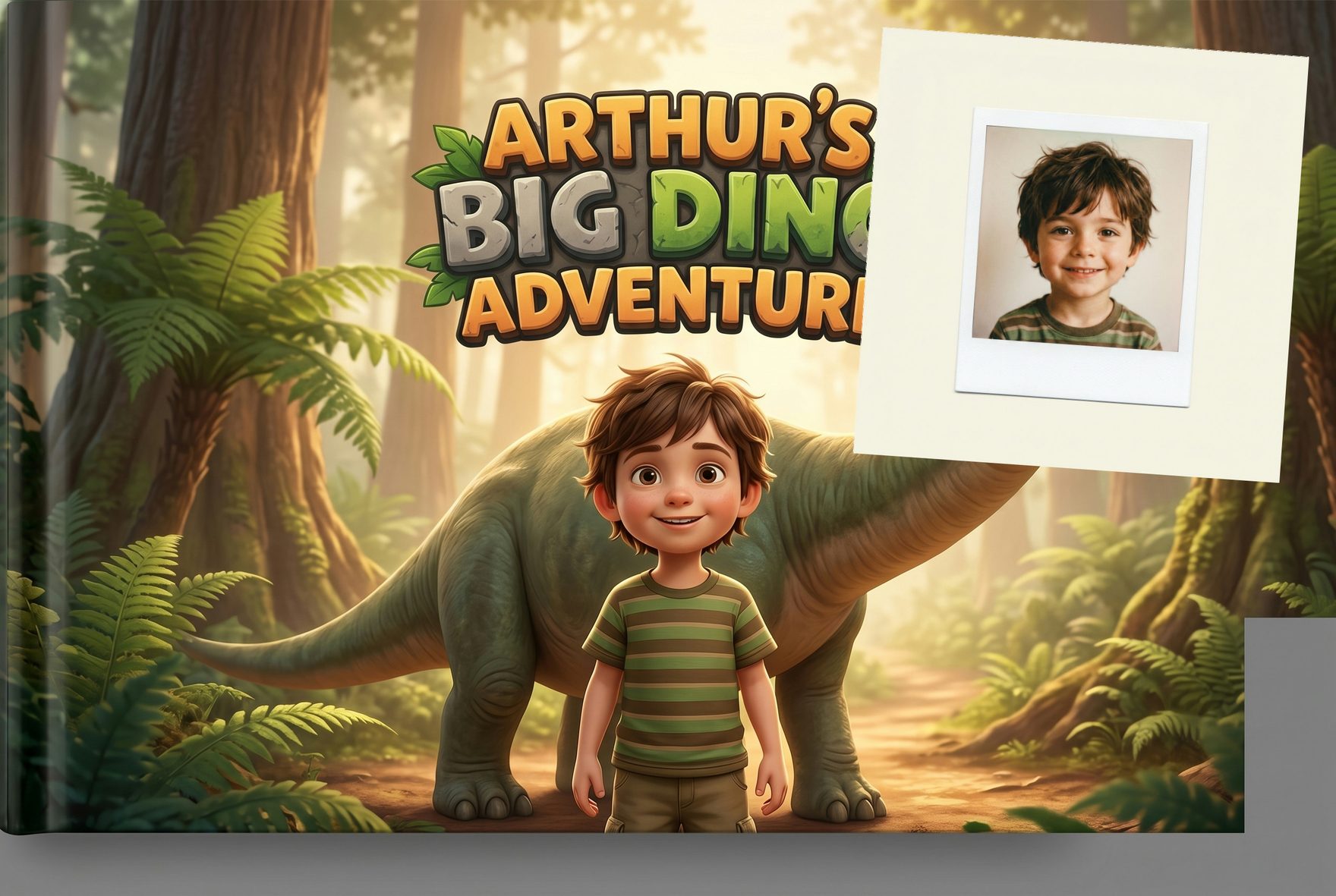
“When a child sees themselves as the hero of a prehistoric adventure, an intense interest becomes part of who they are.”
This is roughly the territory where Little Stories lives. A parent types in their kid's name — say, Soren — uploads a photo, picks a theme, and an AI writes a fresh 18-page Cretaceous adventure from scratch. Soren meets the Triceratops. Soren outruns the storm. The character on the page has Soren's hair and Soren's grin. You can flip through a real example here to see what the finished thing actually looks like.
One practical tip: rotate. Swap books, swap activities, swap museums. A phase stays magical when it isn't the only topic at dinner.
When the Dinosaur Phase Ends — and What It Leaves Behind
It will end. Usually between six and eight, usually without announcement. One day it's sharks, or Minecraft, or the solar system, and the Triceratops plush gets quietly demoted to the top shelf.
The vocabulary stays. The attention span stays. The habit of going deep into something you love — that stays for life.
So save the drawings. Keep the weird fossil museum ticket stubs. Order the hardcover version of the book where your child is the hero. Intense interests aren't a problem to manage; they're a small, bright window into who your kid is becoming. Lean in while the roaring is still loud.