Why Personalized Wizard Books Are Having a Moment
Something shifted in the last eighteen months. The AI art that used to give kids six fingers and melted eyeballs started rendering actual faces — recognizable ones. That's the only reason the personalized wizard book category exists the way it does today.
The demand was always there. Kids raised on Harry Potter, Wizard School fan-fiction, and every dragon-adjacent Netflix series want to be the wizard, not just read about one. What's new is the supply side. AI illustration has finally caught up to deliver true-to-life likenesses, and suddenly a category that used to mean "fill in the child's name on page 3" now means full illustrated heroism.
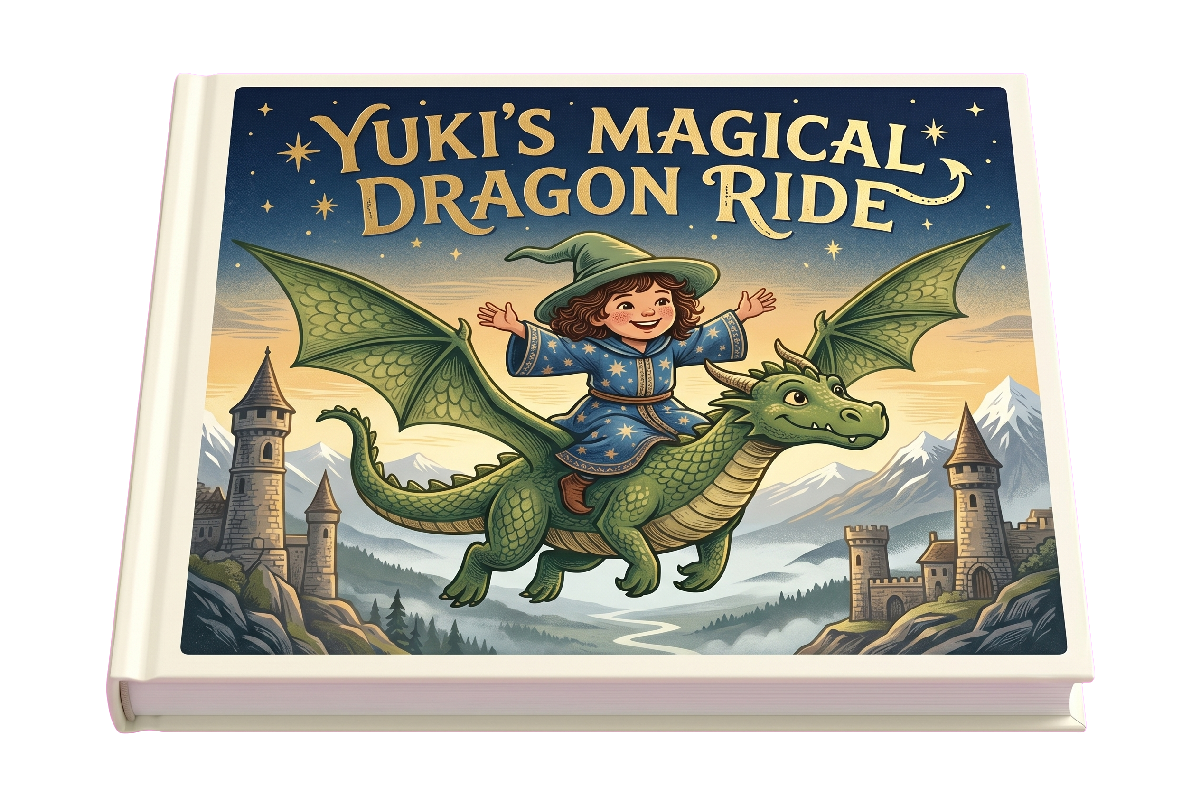
Here's the catch. Search "best personalized wizard books" and you'll get dozens of results. Quality varies wildly. Some still use templates with a name swap. Some generate AI art so generic the child could be anyone. Some ship a glossy PDF and call it a day. Parents are left guessing which ones actually deliver a keepsake versus a gimmick.
This is a buyer's guide for the confused. Three things matter. The rest is noise.
What to Look for in an AI-Illustrated Wizard Book
When comparing a custom magic story for kids, evaluate on three pillars: likeness accuracy, story quality, and hardcover finish. Cheap AI books fail on at least one. The disappointing ones fail on all three — the face doesn't match, the plot is nonsense, and the paperback curls after a week.
An honest AI wizard book comparison starts by asking what the book has to do. It has to make your child gasp at page one, hold up at bedtime reading number forty, and still look handsome on a shelf when they're twelve.
Likeness Accuracy: Does the Child Actually Look Like Themselves?
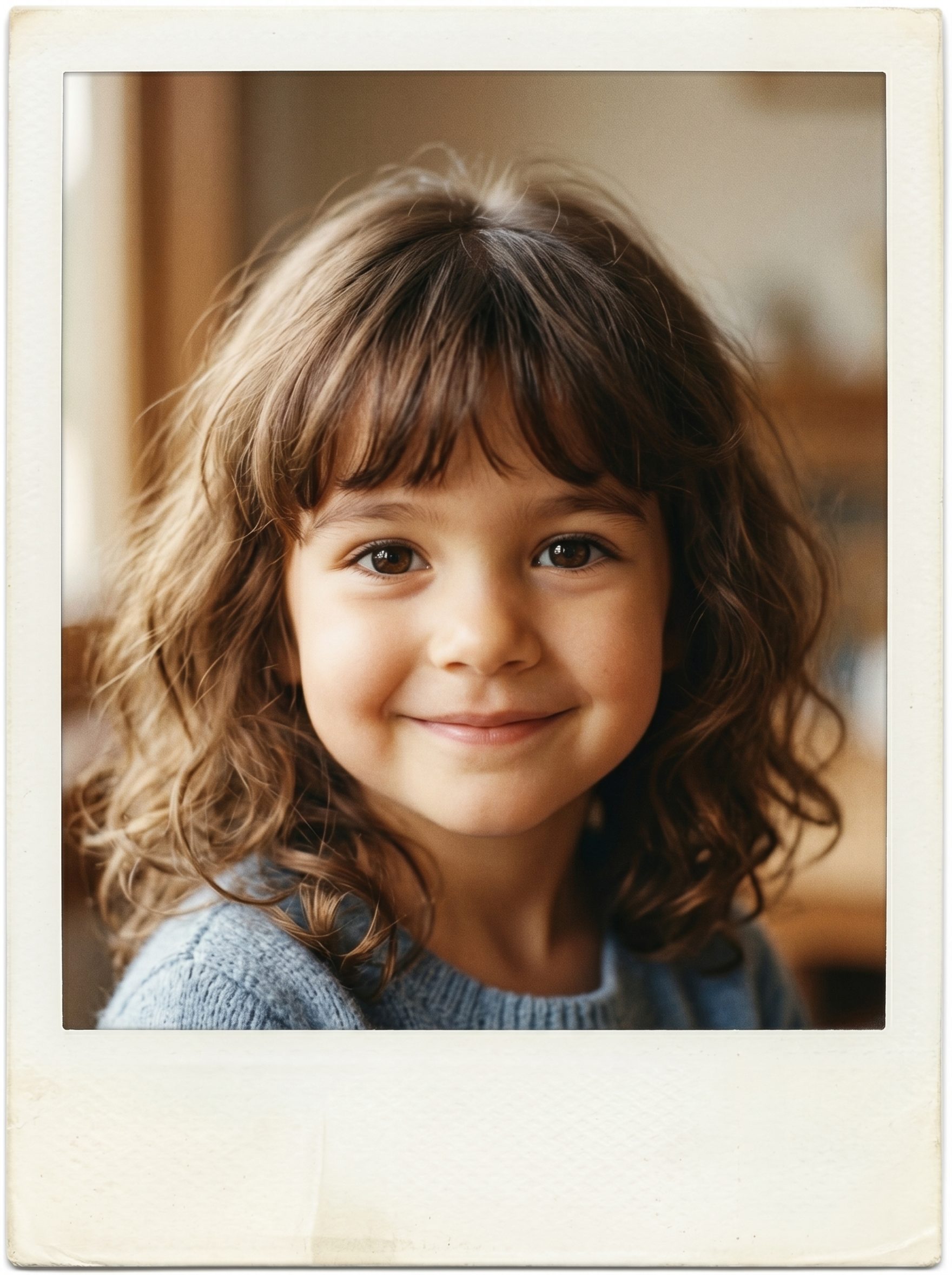
Kids are unforgiving little critics. They will tell you, at age four, that the wizard on page six "isn't me" — and once that's said, the spell is broken for the whole book.
Common pitfalls are predictable. Generic avatars with swappable hair. Single-photo guesswork that hallucinates the nose. Inconsistent faces from spread to spread, so the hero is subtly a different kid every time they cast a spell. Skin tones that drift warmer or cooler depending on lighting. Curls rendered as straight hair. Freckles erased. Glasses forgotten.
“If your child can't recognize themselves on page one, the magic is already broken.”
Gold-standard AI does three things differently. It locks a consistent character model across every illustration. It preserves specific features — freckles, glasses, curls, the gap-tooth — rather than smoothing them into a default. And it handles the whole range of skin tones and hair textures with actual fidelity, not an "ethnic" preset.
Little Stories' pipeline is engineered around child likeness specifically, not repurposed adult-portrait tech. The photo you upload is used to extract face, hair, and skin tone for character modeling — then deleted from servers within 24 hours. Only the illustrated character persists. That's the right tradeoff: maximum likeness, minimum data footprint. For a deeper look at how this plays out in wizard stories specifically, this walkthrough of the spellbook flow shows the full wizard-school build.
Story Quality: Is It Actually Worth Reading at Bedtime?
AI-generated story slop is real. Repetitive plots. Awkward near-rhymes that almost scan. Character arcs so shallow the child learns nothing, risks nothing, and arrives home with a vague sense that magic happened somewhere off-page.
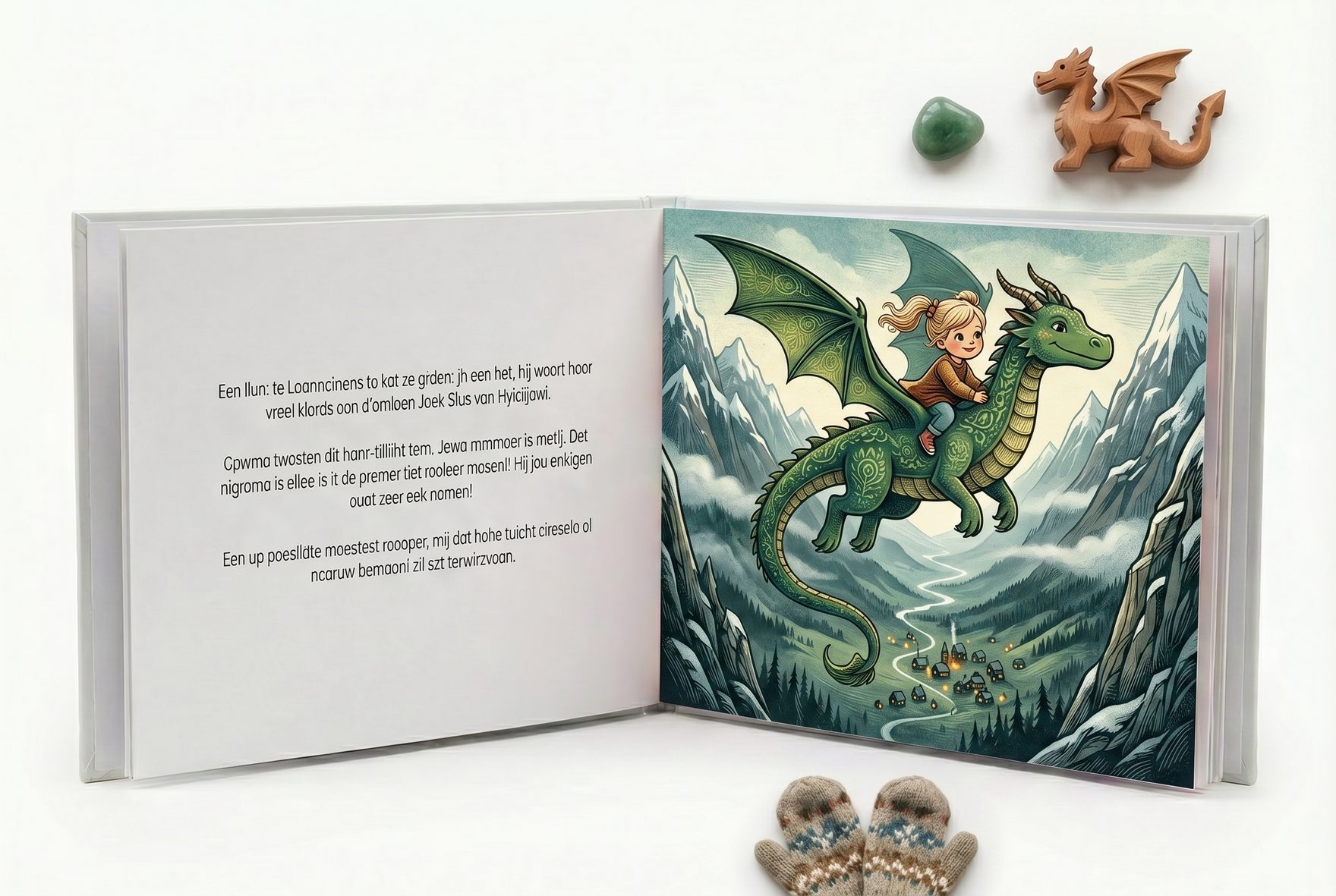
What to look for: human-shaped narratives with an actual emotional arc — courage, friendship, problem-solving — age-appropriate vocabulary, and a satisfying wizard-school-style ending where the hero earns the win. Bedtime stories get reread two hundred times. The prose has to survive that.
Little Stories uses a layered model pipeline — Grok 4.1 generates three distinct concepts, Claude Opus writes the full 18-page script — and then gives parents unlimited chat-based revisions before paying a cent. Not "approve or regenerate." Actual line-edits. Add the grandma. Change the villain's motive. Swap the moral from Courage to Friendship. Research on bibliotherapy in early childhood shows why narrative specificity matters — kids internalize lessons better when the story is about them, not a stand-in. Read sample pages before buying. Reviews mentioning art but not writing are a yellow flag.
Hardcover Finish: Will It Survive (and Be Treasured)?
A keepsake has to feel like one. That means full-bleed printing on premium coated paper, sewn hardcover case binding, and illustrations that run edge-to-edge rather than marooned in a white border. Little Stories ships a 20-page landscape A4 hardcover — 18 story pages plus 2 covers — through Peecho, with tracked worldwide delivery in 3-10 business days.
Contrast with the cheaper end of the market: print-on-demand paperbacks that warp after a month, thin softcovers that dog-ear on contact, and digital-only files with no physical artifact to hand down. A wizard book is the kind of thing a kid should find in a box twenty years later and still want to open.
AI Wizard Book Comparison: How Little Stories Stacks Up
The buyer's checklist, condensed: likeness accuracy, story quality, hardcover finish, turnaround time, price-to-keepsake value. Little Stories covers all five — about 5-10 minutes in the wizard, unlimited revisions, and a $24.99 hardcover edition that ships a real book, not a PDF-in-disguise.
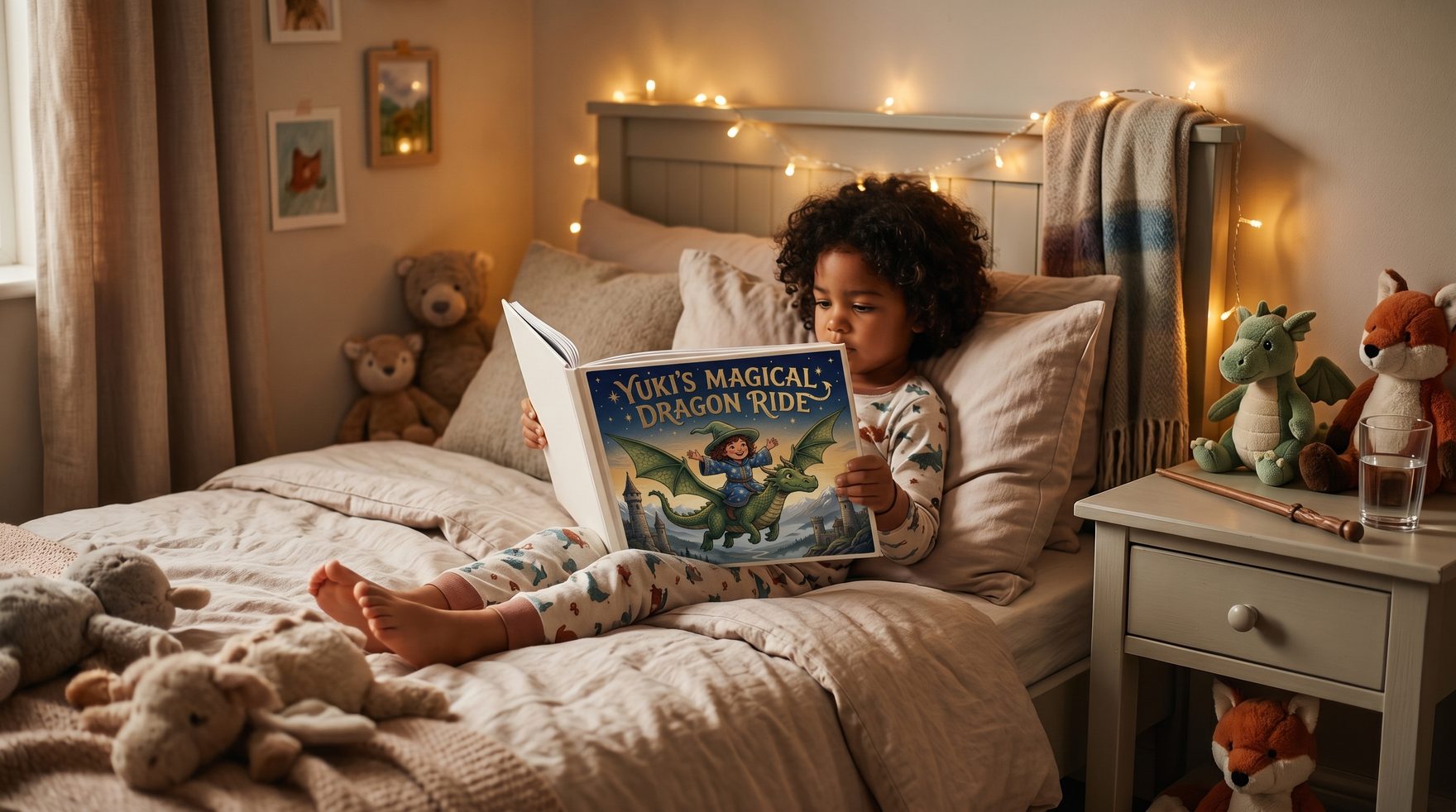
Typical competitors fall short on one axis or another. Template-based personalization swaps a name but keeps the art generic. Low-res AI shops generate something dreamy on the cover and inconsistent everywhere else. Paperback-only sellers skip the keepsake entirely. If you want a personalized Harry Potter style book without compromise, the gold standard is the one that nails all three pillars in a single order.
Flip through a real sample wizard-school book before you commit — read it before you pay a cent is the whole pitch. Or browse the broader ranked roundup of personalized AI children's books if you're still comparison-shopping. Either way, the wand's ready when the wizard is.