Personalized pirate books have a reputation problem. Half the parents who try them love the result; the other half remember a tired 2010-era novelty where their kid's name got pasted into a generic template alongside a stock illustration of a redheaded boy. Both experiences are real. They're just not the same product.
Here's what's actually true in 2025 — and what to demand before you spend a cent.
Myth 1: "All Personalized Pirate Books Are Just Name-Swaps"
The old model was exactly what it sounds like. A studio wrote one pirate story, printed thousands of copies with [NAME] slots, and ran a find-and-replace before binding. The art? Identical for every kid. The plot? Identical for every kid. The "personalization" was a glorified mail merge.
A modern custom pirate book for kids works in the opposite direction. The plot bends to the child. Their sidekick might be their actual baby sister. The mutinous parrot has the same name as the family dog. The opening scene isn't "Captain Finn sailed the seven seas" — it's Finn waking up in a bedroom that looks like his bedroom, finding a treasure map tucked under his pillow, before the ship even appears.
“True personalization isn't a name on a page — it's a child recognizing themselves in every chapter.”
Depth of personalization is the single biggest quality signal when comparing the best personalized storybooks. If the sample preview shows the same illustration twice with two different names — keep shopping. A genuine personalized pirate adventure story should be unreproducible by design. Two kids with similar inputs should still get two different books.
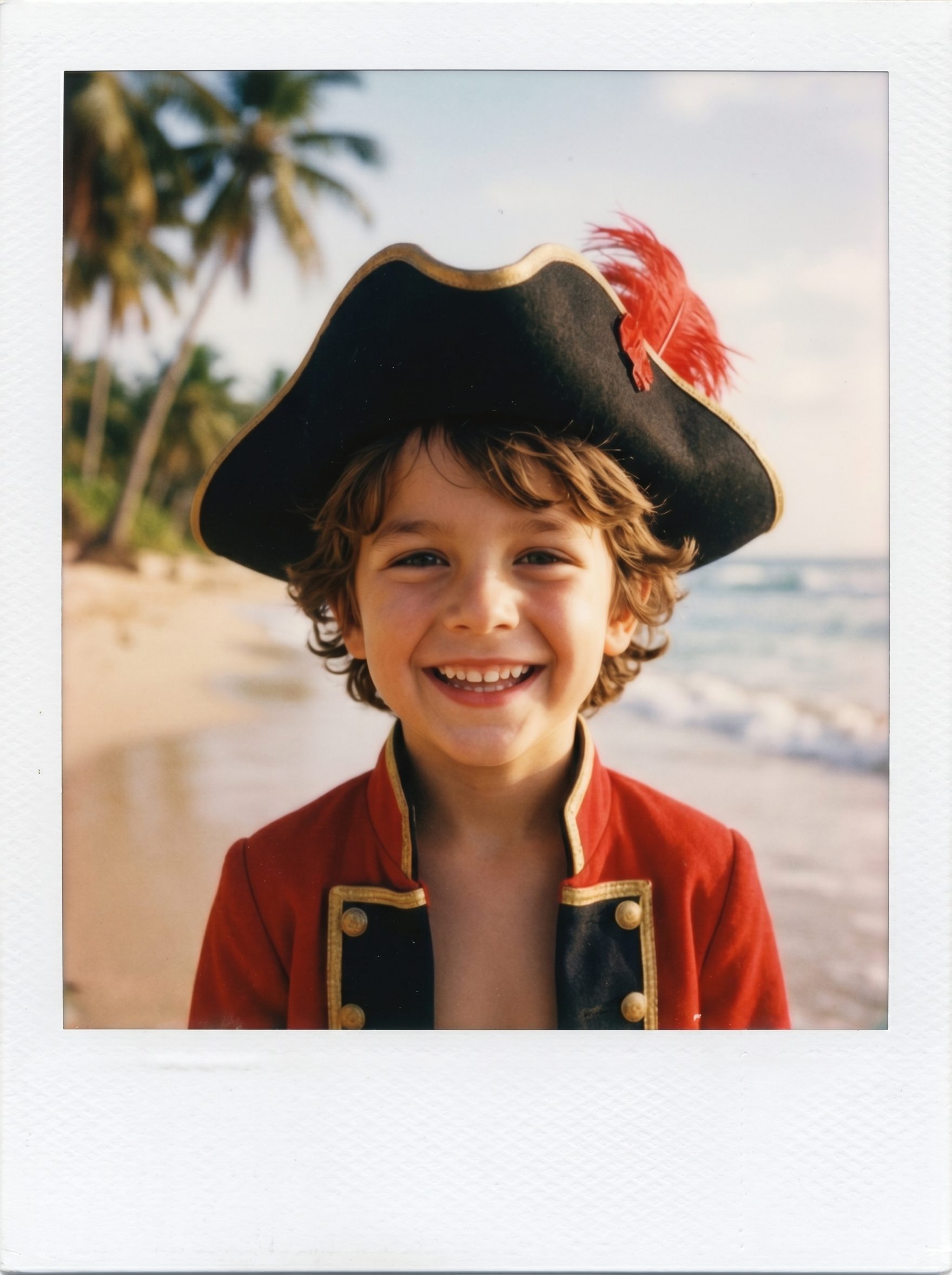
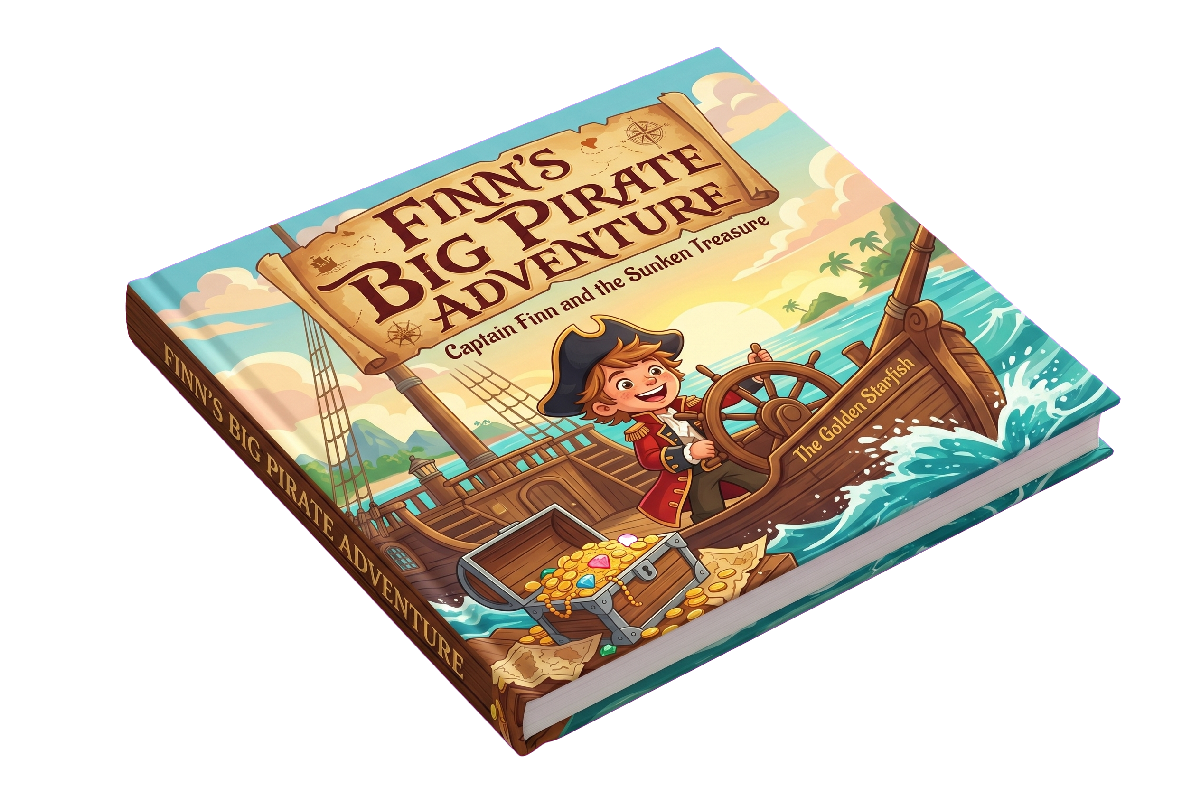
For a deeper look at how this kind of immersion changes a child's relationship with reading, this piece on why personalized pirate books spark imagination is worth the detour.
Myth 2: "AI-Generated Illustrations Look Creepy or Generic"
Fair concern. Early AI art was a nightmare gallery of six-fingered hands and faces that drifted between pages like a witness-protection program. That era is over — but only for studios that invested in art direction.
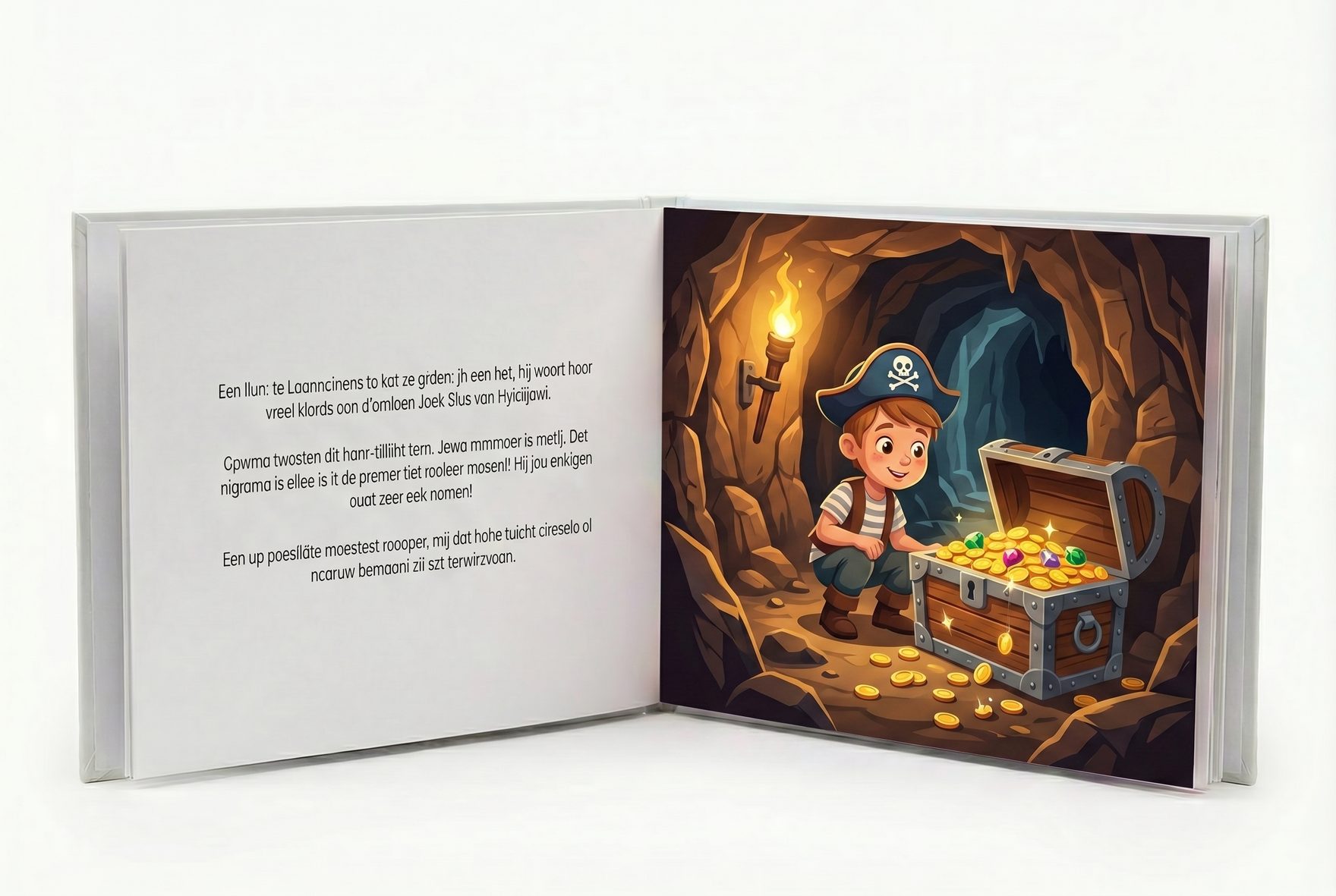
The fix isn't more AI. It's more taste. Strong publishers use curated style models (watercolor, 3D animation, anime, paper cut-out, claymation, and so on), a single reference photo to anchor likeness, and human review for character consistency. The result: a kid in a striped shirt on page 3 is still wearing that striped shirt on page 17, with the same hair texture, same skin tone, same slightly-crooked grin.
The best AI personalized children's book today can capture a child's face the way a portrait artist would — soft, expressive, recognizably them. Markers of quality to look for: faces that emote, hands with five fingers, consistent character design page-to-page, and an age-appropriate softness (no hyperreal pores on a 4-year-old).
If you want the engineering details, this breakdown of how AI illustrates children's books walks through the pipeline. A pirate book with my child's name rendered well is no longer a tech demo. It's a craft.
Myth 3: "They're Too Expensive to Give as a Gift"
Most personalized hardcovers land in the $30-$50 range — about what a mid-tier LEGO set costs, and roughly the price of two movie tickets. Little Stories' hardcover + PDF bundle sits at €19,95, with a digital-only PDF at €29,95 for parents who don't need the physical copy.
Now compare durability. A plastic toy is outgrown in six months. A personalized hardcover sits on the shelf for a decade, gets read aloud at sleepovers, gets passed to a younger sibling, ends up in a memory box.
Research on personalized storybooks found that pre-readers engage substantially more with books featuring themselves — and re-read them more often. So when parents ask are personalized books worth it for a birthday or holiday, the honest answer is: per dollar of re-read value, almost nothing beats them.
Myth 4: "The Story Quality Suffers When It's Personalized"
This is the assumption that breaks down fastest under inspection. Good personalized publishers don't write around the child — they start with a professionally constructed master narrative (clear arc, real stakes, age-appropriate vocabulary), then layer personalization on top.
The craft markers are the same as any picture book. Does the rhyme scheme actually scan when read aloud? Does the antagonist have a motive beyond being "a bad pirate"? Does the third act earn its resolution? A personalized pirate adventure story can absolutely deliver all of that — Little Stories runs its full 18-page script through Claude Opus, then refines it through unlimited chat-based revisions before you pay.
Which is the real test: preview the book first. Any custom pirate book for kids worth buying lets you read the whole thing before payment. If it doesn't, that tells you something.
Myth 5 & 6: "Shipping Takes Forever" and "Kids Don't Actually Care"
Shipping first, because it's the easy one. Print-on-demand changed everything. A personalized hardcover now arrives in 5-10 business days via tracked worldwide shipping, and the digital PDF is available instantly — usually within ten minutes of finishing the wizard. The bottleneck used to be production. Now it's just the postal service.
The "kids don't care" myth is the one that genuinely surprises first-time buyers. Then they witness the recognition moment. A child opens the book, sees their own face on the captain, and goes silent — then loud. One parent put it this way: "Tears in my eyes when we read it. Liam's jaw dropped when he saw his own rabbit in the story."
The psychology behind it is well-documented. Children's attention spikes when they hear their own name — the so-called cocktail-party effect — and self-referential processing boosts vocabulary retention and re-read frequency. A pirate book with my child's name isn't a gimmick. It's a hook the brain is wired to bite.
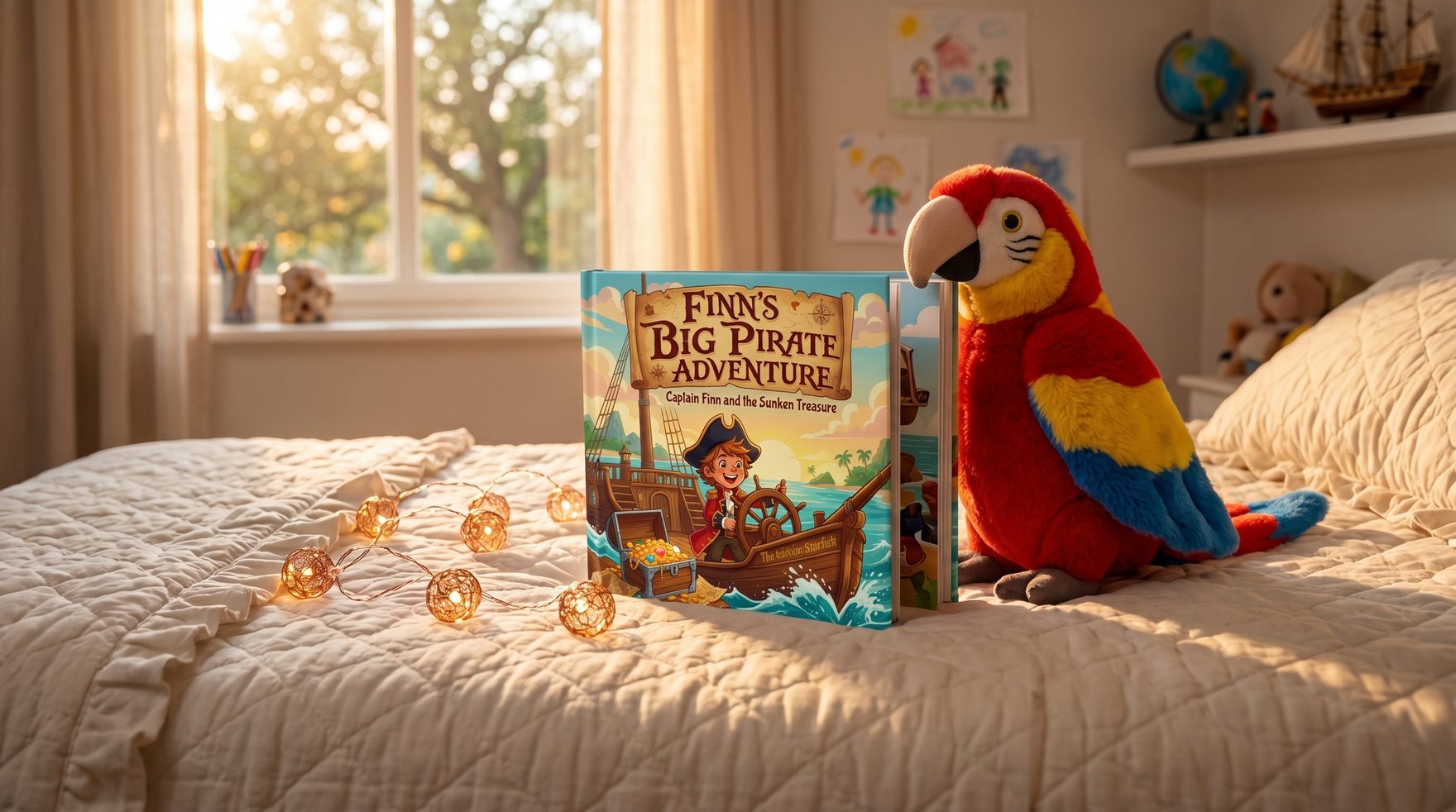
So — what makes a great one? Deep plot integration, not name-swaps. An AI personalized children's book illustration style that looks like art, not output. A sturdy hardcover that survives a decade of bedtimes. And a sample preview before you pay. Demand all four. The good ones deliver all four.